
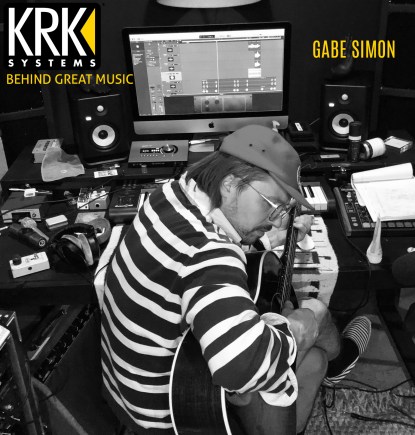
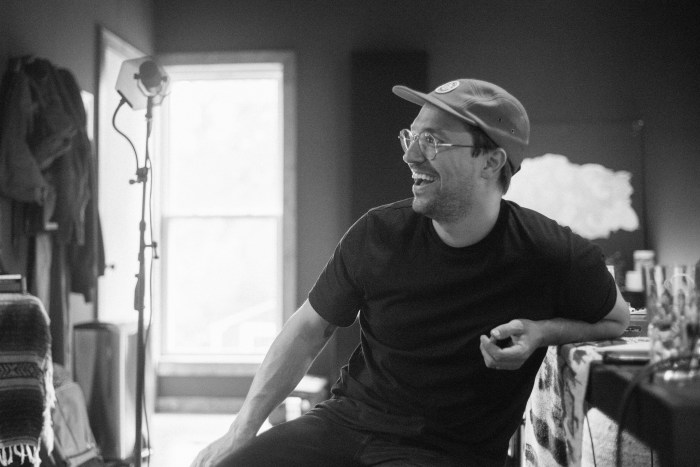
 Just like KRK Systems, ROKIT G4 user Gabe Simon is Behind Great Music as an all-in-one songwriter/producer/musician. He began his career while in college, writing for and fronting the indie-rock band Kopecky which had great and widespread critical acclaim and Alternative Radio success for the 2012 release of “Kids Raising Kids” via ATO Records and the 2015 sophomore release of “Drug For The Modern Age.” Since then, Gabe has been busy producing and writing songs for numerous projects including Dua Lipa, Wilder Woods, Jai Wolf, American Authors, Adam Lambert, Coin, and Fever 333 to name a few. Gabe is currently working with Grandson, MXMTOON, Miya Follick, Whethan, Lovely the Band, and Grizfolk.
We are fortunate to have Gabe as a “KRK Blog-takeover Artist” who has shared his songwriting approach and perspectives with us through his unique world:
As a producer/artist/creator, I spend about half my time co-writing. Before Covid-19 2020 I brought people into my home to collaborate 3-4 times a week. And now, with Zoom and plug-ins like Audiomovers, I’m collaborating probably 2-3 times a week.
 I think people have trouble getting into co-writing because they think it’s scary to work out great/shitty/weird ideas in front of people. Or they think it reflects on their creativity in some negative light. But music is collaborative by nature. Playing guitar in your room is just playing guitar, but bring a friend over on drums and it becomes music. A great idea can happen in a split-second flash and if you’re not paying close attention, the moment will slip by without anyone noticing.
I’m terrible with this—I have a horrible memory and half the time I forget to hit record on my iPhone to capture the 30-seconds that happened over a 3-hour period of coffee and cigarettes with another songwriter, so I started tracking the entirety of my sessions. I don’t like when people feel like they are being recorded, (even though, ironically, that’s what we are there to do). People have a tendency to change once they know they’re on tape. So now, I’ll usually turn on my piano mics (a pair of Electro Voice 635As), and they pick up conversation incredibly well.
As a co-writer, you have to be spontaneous. Sometimes the moment is perfect, so we just have to record it where it is. I operate a studio that’s ready to go at any second, so usually I can throw a mic on the guitar (87 or 414c) and cut a vocal (SM7 or 87) in 30 minutes – then I’ll dive into production to keep the moment going.
 I find co-writing is all about scene changes. The idea that sparked the excitement might come from a guitar and vocal, but the concept for verse two starts with an 808 or Mellotron line, so I want to be ready to run. I understand this isn’t feasible for everybody, but the more you can streamline your set up, the better. It helps you get out of the way and allows the music to happen.
I started producing for this very reason. I was sick of walking into rooms and running faster than the producer. I thought the pace killed the vibe because they always seemed caught off guard when we needed to hit record, so I started producing and creating in a way that focused on the moment. Thankfully, artists and writers love the efficiency and excitement of this creative process. It’s not original, but I do it my way.
 But it all comes back to the moment when the universe aligns, all existence is at peace, and the greatest song idea ever is born. That moment usually happens when you’re dropping the kids off at school, or cowering in a coffee shop, or out of breath on a treadmill, but the co-writing session begins before the co-writing session. It doesn’t matter what the style is: trap, hip hop, rock, alt, pop, bedroom, electronic, or just plain old piano vocal – but come into the room prepared with something.
By nature, I’m a melody guy. I hear things and then I sing them in an unintelligible language. I do that over and over again until the chants of some lost tribal language turn into lines like “you can bury every hatchet, but you can’t bury the past.” It’s my process—it’s bizarre, but I like it. My wife hates it and my kids don’t get it, but it’s my thing. Do your thing!
 Some of my best ideas come from this process. I have over 10,000 voice memos on my phone and only around 20 are worth a replay. Or at least that’s what I think… Sometimes I send one of those other 9,980 ideas to my manager or publisher who say, “You know, this song ‘New Recording 5938’ is kinda dope”. That’s the best and worst part about managers and publishers; they make you question everything. Sometimes you send what you think is the best idea ever – I mean “Let It Be” on MDMA – and get a… “Meh”.
But I love that questioning. It Keeps me on my toes—makes me work harder. Also, I only trust a few people, and I really trust them. And my own instincts. And if my wife hates it, it’s a hit.
If a song gets an A+ in all those categories, we are doing great. I want my team to love it, because if they love it they can pitch it and help it find a home.
Sometimes my team doesn’t like a song. If they don’t think it’s a hit and I do, I’ll go pitch it. There was a song that I pitched in an A&R’s office and I told them the story, and why it was great, and then I left. The next day I got a call saying, “So-and-so wants to cut it.” Your career in music only works as hard as you work. This same rule applies to your team.
 My publishers (Pulse) are badasses. Not only do they make sure songs are registered properly with ASCAP (or whichever Performing Rights Organization you like), they do all the yucky split stuff. It’s usually easy: 3 people in the room, let’s split three ways. But sometimes, you got a dude who has a dude, and they brought in their mom, and her sister adds a snare on the last verse, and the artist wants 25%. Suddenly, you’re only getting 5%… so you need a publisher and a manager who fight for every piece.
You gotta knock on doors if you believe in something. I call people all the time. “What’s exciting? Who’s looking? When can I get them in the studio?” I don’t think it should be intimidating. It’s music, not life and death. And the people in this business all want the same thing you do: the moment. Where they get to be a part of building something – to hear that hit before anyone else – to dream things that 3 minutes ago didn’t even cross their minds.

“Go. Be reckless. Be smart! Create in bizarre ways. Be prepared for the unknown. Make dope shit and they will come.”
~ Gabe Simon
Gabe Simon uses KRK Monitors, Epiphone and Gibson guitars.
More Info:
KRK ROKIT MONITORS
EPIPHONE GUITARS
GIBSON GUITARS
Gabe Simon Twitter @callmemrgabriel
Gabe Simon Facebook @MRGABRIELMUSIC
Gabe Simon Instagram @callmemrgabriel
 If you’re a fan of musical gear you’ve surely heard of the NAMM show in Anaheim California. If you’ve never been, it’s an overwhelming bliss of musical stimuli that opens your eyes wider at every juncture. As a musician, it’s where you go to see the newest—greatest—latest—bestest-of-the-best gear that will soon hit the market in the upcoming year, but it’s also where you go to meet like-minded musicians who all share the same passion of music creation and performance.
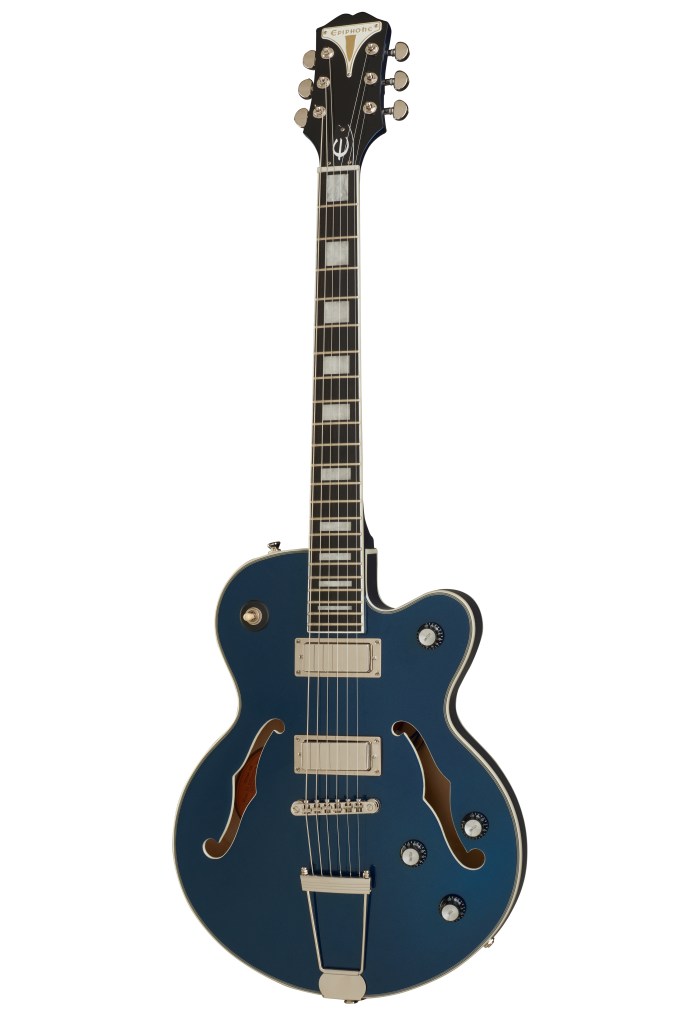
 Guitar Solo Contest at NAMM in conjunction with Gibson and Epiphone. Each day, 12 fearless battle-axing warriors had 15 minutes to get acclimated to a short piece of music before recording one live take of their solo performance through ROKIT G4 10-3 monitors in front of NAMM-goers. Word of the contest spread quickly as each daily winner took home a new pair of ROKIT G4 RP5 White Noise monitors and a set of KNS8400 Headphones. Each daily winner then went on to a final post-Namm round where a panel of judges from Loudwire ranked each solo anonymously based on four criteria to determine a grand prize winner who was awarded an Epiphone Uptown Kat ES guitar.
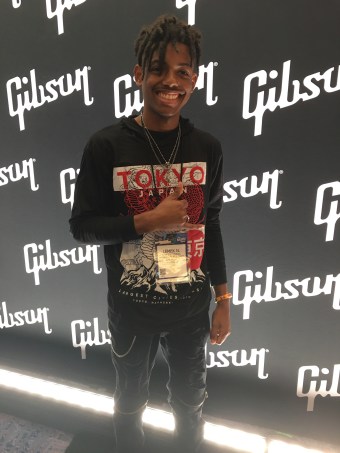
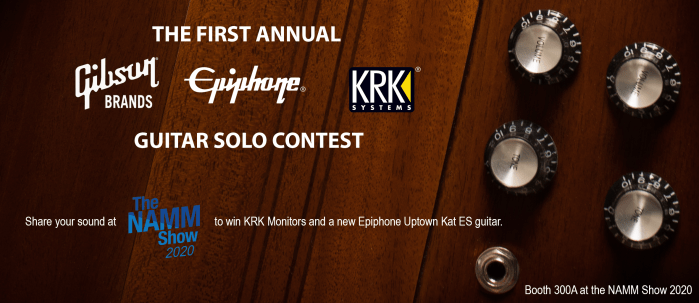
 Each day, after the final 12 daily performances, the recordings will be judged on specific criteria (Creativity, Originality, Accuracy, and Technique) by a panel of Gibson employees and endorsed artists. One winner per day will receive a pair of KRK ROKIT G4 studio monitors, KRK KNS Headphones and other Gibson and Epiphone swag. Winners will be announced daily at 4:30 p.m. at the KRK booth and on social media. They will also be contacted by a Gibson representative who will coordinate the shipping of the daily prize. The winners do not have to be present to collect the prizes.
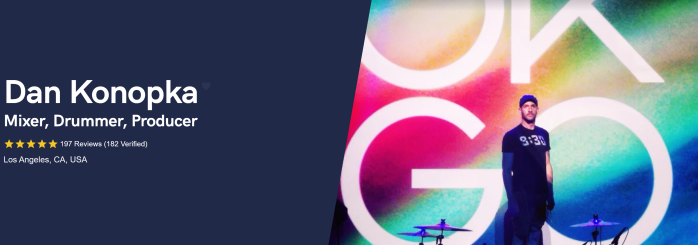
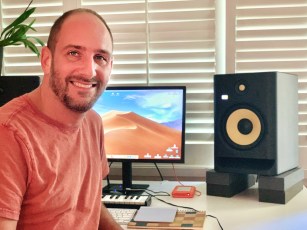 With KRK, you’re not going to find a group of people more supportive or fired-up about DIY music creation. On a daily basis, we thankfully hear from and talk to incredibly talented musicians, producers, mixing engineers and songwriters about their experiences with our gear. Recently, we caught up with a KRK user who we truly respect in that DIY spirit; someone who will forever be ingrained in Rock & Roll history with one of the most engaging music videos ever.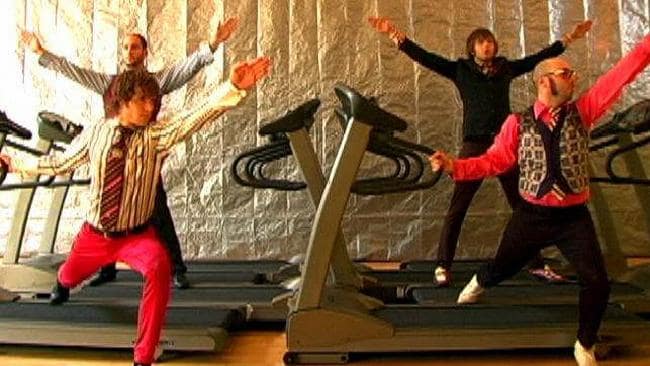
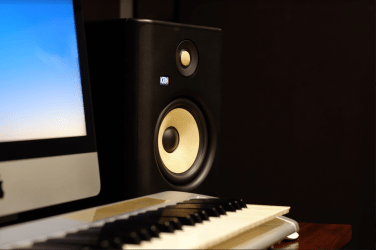
 At KRK, we worked hard on making sure the new ROKIT G4 studio monitors were the absolute best they could be. We took a lot of knowledge from what we learned making the higher-end V Series 4 monitors, to reinvent a new product that delivers incredibly accurate sound reproduction for all music genres and applications.



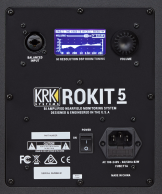 We wanted to build something game-changing for the new ROKIT G4 line that enables you to achieve better final mixes overall. In terms of critical listening, the G4 monitors are completely different, and a major upgrade from the previous G3 line, so our intentions with the EQ Recommendation tool were to suggest a flatter condition and help get you to a better starting point. Ultimately, it still comes down to preference and using your musical ear, but it’s certainly great to have this feature available along with the others in the app.
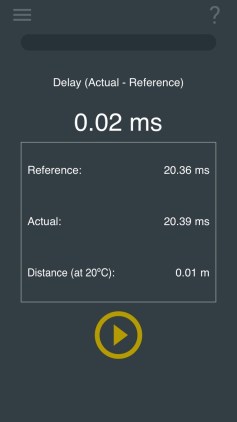
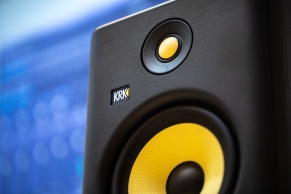 Five of the app tools work with any monitor setup. This includes the Level Meter, which assists with monitor level calibration to ensure all monitors are at the same dB level, as well as the Delay Analysis feature that helps calculate the time from each monitor to the user’s ears. Additionally, the app’s Polarity function is used to verify the correct wiring of monitors, minimizing bass loss and incorrect stereo imaging reproduction—the results of monitors being out of phase, while the Spectrum RTA and Sound Generator are great for finding nuances in any environment. Also included is an unprecedented Monitor Alignment feature, which is used to determine the best placement of multiple monitors within proximity. Finally, the EQ Recommendation tool, specific to ROKIT G4 helps acclimate monitors to an environment by analyzing the app-generated pink noise and subsequently suggesting the best EQ preset, which is set manually on the back of the G4 monitors.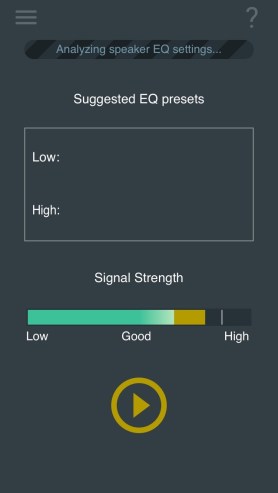
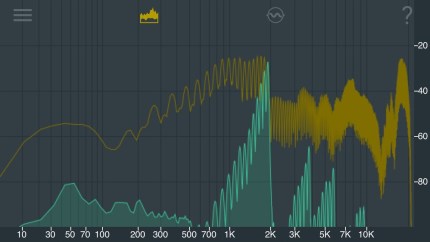 The Spectrum RTA Tool is used to measure and display the frequency spectrum of the input audio signal in real time. It uses the Fast Fourier Transform algorithm to generate its frequency analysis view of amplitude vs frequency. This analysis can be used to detect various factors that affect the listening experience in your environment. It includes a signal generator that can generate sine waves, white noise, and pink noise. There is also a peak hold function. If you tap onto the screen, a cursor display will appear showing you the actual frequency and amplitude values. To disable the cursor just drag it outside the screen.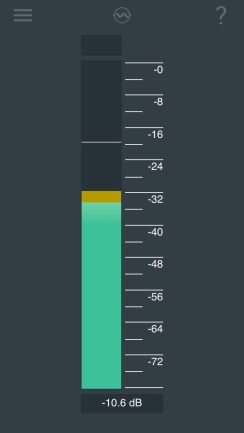


 We hope these audio tools are helpful for achieving better results with your audio productions and look forward to hearing what you create!
 Behind Great Music